
News and Insights
Madagascar Challenge Fund awards grants to researchers focusing on poverty reduction
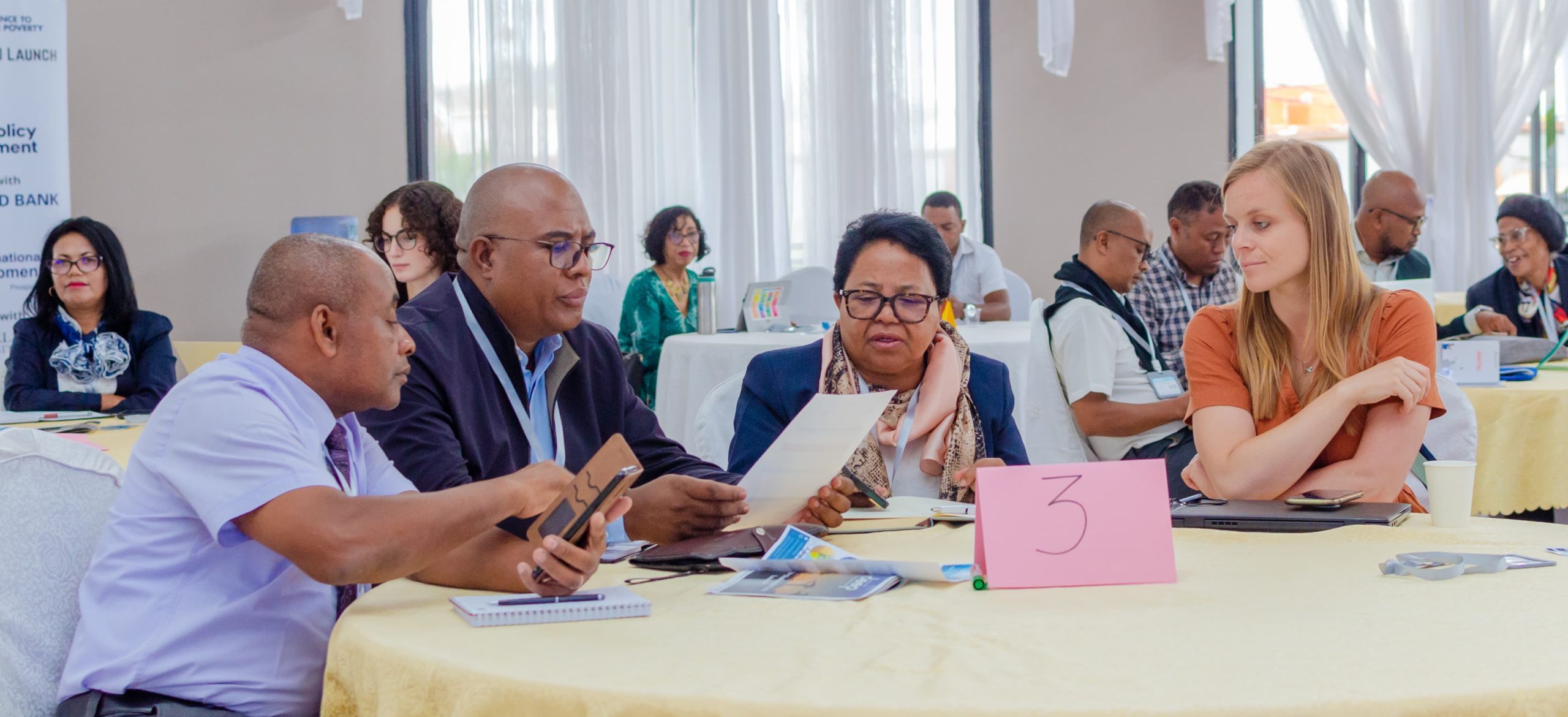
Nine research teams in Madagascar have won grants for projects which will generate insights and evidence to help tackle extreme poverty in the country. The projects will provide research outputs tailored to the needs and priorities of policymakers, with the objective of informing policy, programmes and national strategy.
The DEEP Madagascar Challenge Fund has been developed in partnership with the Malagasy NGO ARAKE. Applications for the fund opened in May 2025 and 106 proposals were submitted. The winning projects target pressing issues linked to poverty and poverty alleviation in Madagascar, including climate change, mining, sericulture, soil health, the marginalisation of vulnerable communities and internal migration. They are:
- Laboratoire Mitsilo for a project which will evaluate whether improving access to credit and farming skills and knowledge, through village savings and loans associations, can enhance the adoption of climate-smart agriculture amongst small scale farmers, reducing unsustainable practices such as slash-and-burn farming and strengthening rural livelihoods
- Centre d’Etudes et de Recherche en Économie de la Santé (CERES) for a project examining how environmental conflicts in mining zones can be addressed through strengthened community rights, inclusive governance, and improved regulatory frameworks. Recommendations aim to safeguard vulnerable communities and promote sustainable mining which contributes to poverty reduction
- Findrama Marc Elson Rasolofoniaina for a project which will explore how pastoral communities are responding to the growing challenges of worsening droughts which are threatening both herders and their herds. The aim is to examine the links between climate shocks, economic hardship, and local adaptation strategies with the goal of identifying pathways to reduce rural poverty and strengthen resilience
- Centre FAFIALA for a project which aims to revive sericulture by regenerating high-performing Bombyx mori silkworm strains suited to local conditions. The goal is to stabilise and diversify incomes for vulnerable households, including those affected by migration, and create sustainable economic opportunities in fragile rural areas
- Institut d’Etudes Politiques Madagascar (IEP) for a project investigating how internal migration and informal mining shape rural poverty and resilience in the face of climate change. By generating evidence on the links between climate shocks, extractive livelihoods, and social vulnerability, the project aims to inform national policies that strengthen rural resilience and reduce poverty
- A team co-led by Mamy Rajaonarisoa and Anja Radoharinirina for a project analysing the factors that shape women and young people’s vulnerability to climate change in rural and agricultural communities. The aim is to build a solid evidence base to inform inclusive policy dialogue, identify intersectional drivers of vulnerability and promote strategies that strengthen resilience and equity
- CR-AT2D for a project which will combine rural women’s expertise in preserving soils with modern soil-mapping technology. Using collected soil samples, the team will produce a detailed soil fertility map which can be used to inform agricultural interventions to enhance soil fertility based on both traditional and scientific approaches
- Junot Livah Randriamizana for a project which will examine how symbolic violence, power relations, and cultural norms contribute to the marginalisation of vulnerable groups in low-income neighbourhoods. By linking multidimensional poverty with social and cultural dynamics, the research aims to provide evidence-based solutions to reduce inequality and enhance resilience in urban communities
- Aquaterre for a project which will address the lack of evidence on the contribution of artisanal and small-scale gold mining (ASGM) to rural livelihoods and household incomes. The study will highlight the role of various ASGM practices in sustaining rural livelihoods, providing evidence to inform more effective rural development and mining policies in Madagascar and in similar contexts across sub-Saharan Africa
DEEP, ARAKE, and other key Malagasy stakeholders, including policy makers and research communities, helped to develop the research focus, aims and scope of the Madagascar Challenge Fund. These stakeholders ensured that winning projects fed into national priorities and ongoing work tackling extreme poverty. A National Steering Committee made up of Malagasy researchers, policymakers, and practitioners from various public and private organisations has been created. This Steering Committee approved the successful projects and will facilitate sharing of the research findings to ensure they feed into national programmes and policies.
Jonah Ratsimbazafy from the National Steering Committee said: ‘For Madagascar, conservation is not optional; it is inseparable from the fight against poverty and daily survival. By advancing research and turning science into action, these laureates help protect our unique biodiversity while expanding access to income, food security, and basic livelihoods for the most vulnerable communities. Their impact goes far beyond conservation, contributing directly to poverty reduction, resilience, and inclusive, sustainable development for the nation.’
Ms Fenosoa Andrianjakarivola, General Director of ARAKE, said: ‘This initiative reflects our conviction that lasting change starts with local leadership and local knowledge. By investing in research led by Malagasy scholars and practitioners, we are strengthening solutions that are rooted in context, credible in evidence, and accountable to the communities they aim to serve.’
ARAKE and University of Reading’s Dr Velomahanina Razakamaharavo said: ‘Poverty is not an isolated condition; it is shaped by governance systems, environmental pressures, conflict dynamics, health outcomes, and access to opportunity. Effective responses must therefore be interdisciplinary, collaborative, and anchored in local realities. The DEEP Challenge Fund in Madagascar represents a strategic investment in this approach, one that prioritizes rigorous local knowledge, inclusive partnerships, and solutions designed for sustained, long-term impact.’
DEEP Challenge Funds grants have also been awarded in Tanzania and Ethiopia and Bangladesh. Funded projects have been announced in Tanzania and Ethiopia and will be announced shortly in Bangladesh.
Related News and Insights

The DEEP Madagascar Challenge Fund launched

How climate change affects poverty in Madagascar: Amanda Lenhardt talks to Joanna Upton
